
1–3 years of freshness: store perfume samples like collectors
Store your perfume samples upright, boxed or in opaque containers, in a cool, dark, stable spot away from bathrooms and windows. Keep partially used vials topped up or decanted into smaller bottles to reduce air contact, and reserve a small atomiser for daily wear rather than opening your main sample repeatedly. Get those two habits right and most samples will outlast the time it takes you to work through them.
TL;DR:
- Keeping perfume samples in a cool, dark, and stable environment between 15°C and 20°C prevents rapid degradation caused by heat, light, and oxygen exposure.
- Storing bottles upright, boxed or in opaque containers, and decanting into smaller vials significantly slows oxidation and prolongs sample lifespan.
- Most samples stay fully usable for one to three years, with citrus and aquatic fragrances fading faster than heavier oriental or woody scents.
- Travel damage primarily occurs from heat, so use sturdy, sealed atomizers and avoid leaving samples in cars or sunlit bags during transit.
- Regular weekly checks and proper storage habits can prevent scent degradation and keep a collection fresh and easier to navigate.
Table of Contents
- What is the right way to store perfume samples?
- How do you organise a growing sample collection?
- Decants and working bottles: getting the balance right
- Keeping samples safe when you travel
- How long do perfume samples actually last?
- What are the signs a sample has gone off?
- A collector’s weekly habit that actually sticks
- Building your collection with The Perfume Sampler
- Sources
- FAQ
What is the right way to store perfume samples?
Fragrance is a chemical mixture, and four things speed up its breakdown: heat, light, oxygen, and humidity. Storing samples correctly means controlling all four at once, not just picking a dark drawer and hoping for the best.
Temperature stability matters more than most collectors assume. The ideal range sits between 15°C and 20°C (59°F to 68°F), and consistency counts as much as the number itself. A room that swings between a cold night and a warm afternoon stresses the fragrance’s molecular structure repeatedly, which degrades top notes faster than steady heat ever would.
Light causes a related but separate problem. Even indirect daylight carries near-UV wavelengths that break down aromatic compounds, which is why display shelves quietly damage bottles over time. Original boxes exist for this reason, not just branding. Keeping samples boxed or in an opaque case blocks that exposure almost entirely.
Bathrooms feel like a natural home for perfume, but they are the worst room in the house for it. Daily humidity spikes and temperature swings from showers accelerate deterioration and can corrode metal caps and seals. A bedroom drawer, a wardrobe shelf, or a closed cupboard away from radiators works far better.
Air is the fourth enemy. Every time you open a vial, oxygen gets in, and a half-used sample has proportionally more air sitting on top of the liquid than a full one. Transferring the remaining liquid to a smaller bottle reduces that headspace and slows oxidation noticeably.
- Keep the room dark and away from direct sun or radiators
- Store bottles upright, never on their side
- Box everything you’re not actively displaying
- Decant low-volume vials into smaller containers to cut headspace
- Avoid bathrooms, kitchens, and windowsills entirely
Pro Tip: Check your storage spot at two different times of day, morning and evening, with a simple room thermometer. If it swings more than a few degrees, that spot is working against your collection.
For serious collections, a dedicated wine fridge or thermoelectric cooler set to 12–15°C with minimal door openings beats a standard kitchen fridge, which cycles temperature constantly and exposes bottles to condensation every time it opens. A kitchen fridge is workable for short-term storage of a single treasured bottle, but it’s not designed for the stability a real collection needs.
How do you organise a growing sample collection?
Once you have more than a dozen samples, storage stops being about a single drawer and starts being about a system. Collectors typically rely on tackle boxes, photo storage boxes, labelled drawer organisers, or dedicated fragrance cases to keep everything upright, visible, and protected at the same time.
Each option suits a different kind of collection:
- Tackle boxes work well for larger collections because the individual compartments keep vials from touching and let you sort by size.
- Photo storage boxes with foam inserts suit smaller, more uniform samples like 2ml vials, and stack neatly on a shelf.
- Labelled drawer organisers give the fastest daily access, which matters if you rotate scents often.
- Purpose-built fragrance cases cost more but offer the best combination of light protection and structured slots.
A simple index card or spreadsheet with three fields, fragrance name, date opened, and scent family, turns a messy collection into something you can actually navigate. Sort by frequency of use if you wear fragrance daily, by season if your tastes shift with the weather, or by family (citrus, woods, orientals, florals) if you like building a mental map of your collection.
Foam inserts and small dividers stop vials clinking together and cracking, which matters more with glass than most people expect. And if you like displaying a few favourites, keep that number small. Rotate two or three out at a time and box the rest, rather than lining up the whole collection on a shelf under ambient light.

Decants and working bottles: getting the balance right
Decanting a full bottle into smaller vials makes daily use easier, but it comes with a trade-off: every transfer introduces oxygen, and every partly filled vial has more headspace than the original bottle did. Many collectors solve this by keeping a small “working bottle” for daily wear while the main bottle stays sealed and boxed, which limits how often the primary stock is exposed to air.
Glass, ideally amber or cobalt, is the better vessel choice over plastic. Plastic is porous at a microscopic level and can react with certain aromatic compounds over months, subtly altering the scent. A proper transfer pump or syringe gives a cleaner fill than pouring or spraying directly into an open vial, which wastes product and introduces more air than necessary.
- Use a glass atomiser, tinted where possible, over plastic
- Fill working bottles fully rather than partially to reduce headspace
- Wrap a strip of electrical tape around screw caps for a tighter seal
- Refill little and often rather than letting a working bottle run near-empty
Longevity varies by fragrance family once decanted. Citrus and fresh compositions tend to fade faster than orientals and woods, so a decanted citrus sample deserves a shorter shelf expectation than a heavier amber or leather scent stored the same way.
Keeping samples safe when you travel
Travel is where most sample damage happens, usually from heat rather than mishandling. A hot car boot or a sunlit hotel windowsill will do more harm in an afternoon than a year in a drawer.
- Carry samples in sturdy travel atomisers, not their original thin-walled vials
- Pack them upright in a sealed zip bag to stop leaks transferring scent onto clothes
- Wrap screw caps with tape or a cap guard before packing, and cushion bottles against knocks
- Keep to standard airline liquid limits for carry-on luggage, and check checked-luggage rules if packing larger minis
- Rotate which samples travel with you rather than exposing your full collection to transit conditions repeatedly
- Never leave vials in a car glovebox, boot, or on a sun-facing surface
How long do perfume samples actually last?
Stored correctly, most samples remain fully usable for one to three years, and some fragrance families last considerably longer. The real answer depends less on the calendar and more on composition and how the sample has been handled.
Citrus, aquatic, and fresh green fragrances have the shortest realistic window because their top-heavy citrus and aldehyde molecules oxidise faster than heavier ingredients. Oriental, woody, and amber-based fragrances tend to hold their character for years, sometimes improving slightly as they settle, similar to how a heavier red wine ages differently to a light white. Collectors often think in these terms rather than fixed expiry dates: a fresh, citrus-forward sample gets used within its first year or two, while a rich amber sample can sit boxed for much longer without real concern.
What actually shortens a sample’s life isn’t age alone, it’s exposure. A vial opened once a month and kept boxed the rest of the time will outlast an identical vial left on a sunny shelf, even if both were bought on the same day. That’s the practical takeaway: the storage environment, not the purchase date, is the real clock running on your collection.
What are the signs a sample has gone off?
The nose knows first, almost always before anything looks visibly wrong. A degraded sample often smells sharper, sourer, or oddly vinegary compared to how it opened, particularly in the top notes. Citrus and fresh compositions are usually the first to show this shift.
Colour change is the second reliable signal. A perfume that has darkened noticeably, especially amber or brownish tinting in a fragrance that started pale, points to oxidation from prolonged light or air exposure. This is different from a fragrance that was naturally amber-toned from the start, so it helps to remember the original colour when you first opened it.
A few other signs worth checking:
- The spray pattern has weakened or become inconsistent, suggesting the atomiser mechanism or the liquid itself has changed
- The scent separates or looks cloudy rather than clear
- The dry-down smells flat or “off” compared to your memory of it, even if the opening spray seems fine
None of these signs mean the sample is dangerous to wear, fragrance rarely goes off in a harmful sense, but a degraded scent won’t perform the way it was designed to. If in doubt, test it on a fabric scrap rather than skin first, and trust your nose over the calendar.
A collector’s weekly habit that actually sticks
Ten minutes, once a week, is enough. Rotate whichever samples have been sitting out, check that caps and seals are still tight, and jot the date on anything freshly opened. It sounds almost too small to matter, until the week you skip it.
One sample, a favourite oriental that had been quietly living on a bathroom shelf, started smelling flat within months. Moving the whole box to a bedroom drawer stopped the slide before it went further. Nothing dramatic, just a shelf swap that should have happened on day one.
Start with one box and one checklist. The habit builds itself from there.
— Rupesh
Building your collection with The Perfume Sampler
Buying in smaller, rotation-friendly sizes instead of committing to a full bottle you’ll struggle to preserve fits well with the storage habits covered above. Decants typically come in 2ml, 3ml, 5ml, and 10ml sizes, sized deliberately for the working-bottle approach collectors rely on, alongside full bottles once you’ve found a scent worth keeping long-term.
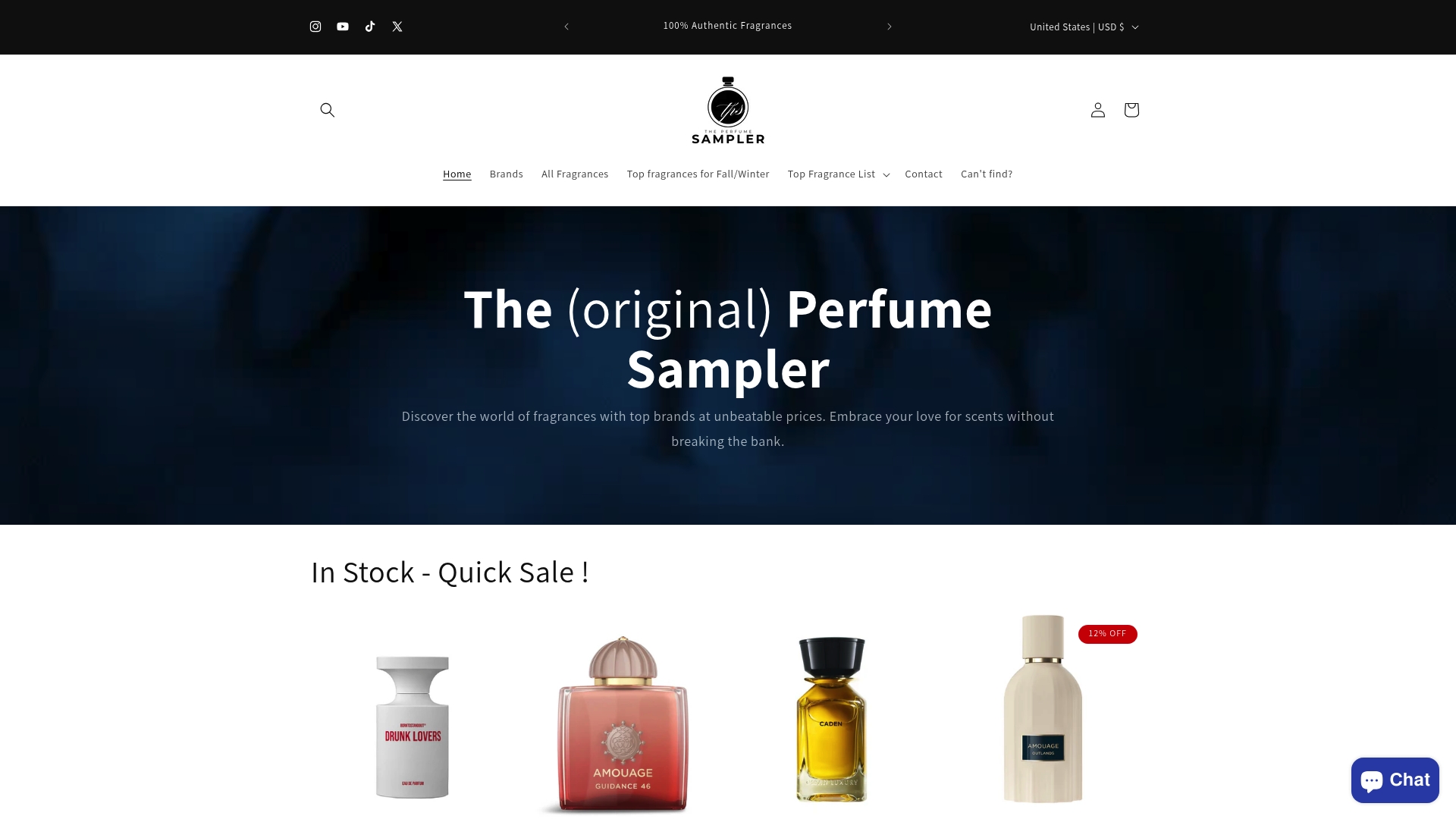
Many fragrance sellers provide authenticity guarantees and customer ratings, helping ensure purchasers are not gambling on a decant’s origin when they’re also trying to get its storage right. If you’re starting a rotation system from scratch, a 2ml starter size is the easiest way to test a scent family, citrus, woods, orientals, before deciding how much shelf space it deserves. Our guide on testing scents on skin versus clothes pairs well with the travel advice above if you’re unsure how to trial a new fragrance properly.
Browse the full fragrance collection to build a rotation, or move straight to full bottles once you’ve confirmed a scent earns permanent boxed storage rather than a trial slot.
Sources
- Perfume storage: the complete do’s and don’ts to keep your fragrance fresh - Perfumegini
- Perfume storage: stop ruining your bottles | PremierePeau
- How to store fragrance oils in 5 right steps? - Iscent Fragrance
- Scent storage solutions: how to organise your fragrance samples & bottles - The Perfume Society
- Where to get fragrance samples — Byrdie
FAQ
What stores let you sample perfume?
Department stores and beauty counters routinely offer sprayed samples or small vials on request, and subscription boxes and discovery kits are another common source. Dedicated decant retailers like Theperfumesampler sell measured sample sizes directly, which suits collectors who want consistency rather than a counter’s leftover stock.
How do people store perfume samples?
Most experienced collectors keep samples upright, boxed or in opaque cases, in a cool, stable room away from bathrooms and windows. Systems like labelled drawer organisers or tackle boxes keep larger collections both protected and easy to navigate.
What is the best website for buying perfume samples?
The right site depends on whether you want variety, authenticity guarantees, or specific niche brands. Theperfumesampler offers decants in 2ml, 3ml, 5ml, and 10ml sizes with an authenticity guarantee on every fragrance, alongside full bottles for scents you decide to commit to.
What is the 30/50/20 rule for perfume?
There isn’t a single, widely agreed definition of this rule within the fragrance community, and it doesn’t appear in established storage or application guidance. If you’ve seen it referenced, treat it as informal advice rather than an industry standard, and rely on the temperature, light, and headspace principles covered above instead.